How the Watchmaker's Mindset Turned Bern Into a Sound Design Capital

If you cracked open a Swiss watch — one of the serious ones, not the tourist-shop kind — you'd find somewhere between 130 and 400 individual components, each machined to tolerances measured in microns. Every single piece has a purpose. Nothing is decorative. And the whole system only works because every part is exactly right.
Now listen to music coming out of Bern.
I mean really listen. Put on headphones, close your eyes, and pay attention to what's happening in the corners of the track — the way a reverb tail is shaped, how a low-end frequency sits in relation to everything above it, the micro-decisions about where silence lives. What you're hearing isn't just good production. It's a philosophy. And it comes from the same cultural DNA that produced those watches.
Precision as a Way of Life, Not a Technique
Switzerland's relationship with precision isn't a professional skill. It's a cultural value that runs through architecture, design, engineering, and — increasingly, people are realizing — music. In Bern specifically, there's a certain temperament that prizes getting things exactly right over getting things done fast. The city thinks before it speaks. It measures twice. It's skeptical of shortcuts.
For artists and producers who grew up inside that culture, this isn't a constraint — it's a creative foundation. When you've been surrounded your whole life by objects and systems where every detail matters, you develop an almost instinctive intolerance for sloppiness. You notice when something isn't sitting right. You notice when a mix has a decision that wasn't fully thought through.
American production culture, for all its brilliance, often moves in the opposite direction. Speed is prized. Vibes are prized. Getting the energy captured in the moment is prized — sometimes at the expense of the kind of patient, granular refinement that Swiss producers treat as non-negotiable.
The Architecture Parallel
Bern's old city — a UNESCO World Heritage Site — is one of the best-preserved medieval city centers in Europe. Walking through it, you're struck not by any single dramatic building but by the coherence of the whole. Everything fits. The proportions are considered. The relationship between structures has been thought about. Nothing is there by accident.
That same sensibility shows up in how Bern-rooted artists approach track architecture. A song isn't just a collection of elements — it's a system where every component has a relationship to every other component. The intro doesn't just exist to get to the verse; it's setting up a spatial and emotional context that the rest of the track will inhabit. The bridge isn't filler; it's a structural necessity.
When you talk to producers from this region about their process, they'll often use language that sounds more like architecture or engineering than music-making. They talk about "load-bearing" elements. They talk about space and tension. They talk about what a track needs rather than what would sound cool.
What This Sounds Like to American Ears
Here's what's interesting: American listeners who encounter this kind of production often can't immediately articulate why it hits differently. They'll say things like "it sounds expensive" or "it feels like a complete world" or just "I don't know, it just sounds right." What they're responding to is intentionality — the sense that every decision in the track was made consciously, not accidentally.
In an era of lo-fi aesthetics and deliberately rough-edged production, there's something almost radical about music that has been meticulously thought through. Not polished in a clinical, overproduced way — Swiss sound design isn't about sterility — but considered. Deliberate. Built to last rather than built to trend.
Streaming platform data is starting to reflect this. Tracks with this kind of careful construction tend to accumulate long-tail plays. People come back to them. They hold up on the fifteenth listen in a way that a lot of trend-driven production simply doesn't.
The Unrushed Studio Session
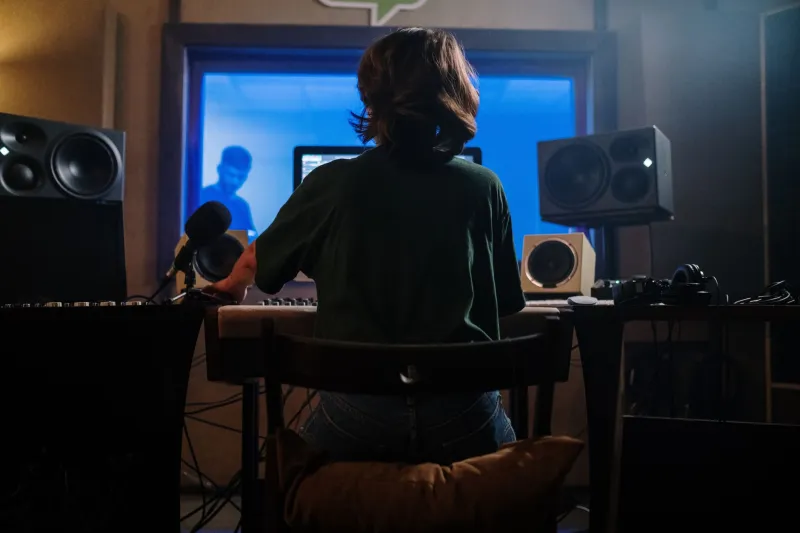
One of the most telling differences between Swiss production culture and American studio culture is time. In Bern's creative community, it's not unusual for an artist to spend an entire session — four, five, six hours — working on a single element of a track. Not because they're stuck, but because they're not done yet.
This would be almost unthinkable in a commercial American studio context, where time is money in a very literal sense and the pressure to move quickly is constant. Swiss artists working outside that commercial pressure cooker have the luxury of patience — and patience, it turns out, produces a very specific kind of quality that listeners can feel even when they can't name it.
It's the same quality you feel when you hold a well-made watch. You can't always explain it. But you know something was taken seriously.
Bringing the Mountain Air Into Your Headphones
For American listeners who've been feeling like something is missing from their playlists — some quality of depth or care that a lot of modern production doesn't deliver — the Bern sound is worth seeking out. Not as a novelty or a cultural tourism exercise, but as a reminder of what music can feel like when the person who made it refused to cut corners.
The watchmaker doesn't rush the movement. The architect doesn't skip the foundation. And the best producers coming out of Bern don't release something until it's exactly right.
In a world that keeps asking everyone to move faster, that's not just a production philosophy. It's a statement.