The Invisible Studio: Why Making Music in Obscurity Might Be the Ultimate Advantage
Imagine releasing a song and not checking the numbers. Not because you're practicing some kind of digital detox wellness routine, but because the numbers genuinely don't determine whether you keep going. Imagine writing an album over three years without a single industry showcase to perform at, no A&R reps dropping by the studio, no viral moment to either chase or run from.
For artists in places like Bern, Switzerland, this isn't a thought experiment. It's just Tuesday.
And it might be the most powerful creative condition available to a musician in 2024.
The Tyranny of the Feedback Loop
American music culture is built on immediate response. Post a clip, watch the comments, adjust accordingly. Play a showcase, read the room, pivot if necessary. The entire ecosystem is designed around rapid iteration based on external input — and it produces a very particular kind of artist.
An artist who is extremely good at reading what other people want.
That's a real skill, and it can produce real commercial success. But it's a different skill than knowing what you want to make — and it tends to crowd out the second one. When you're constantly calibrating to external feedback, the internal compass starts to drift. You stop asking "what does this song need?" and start asking "what will this song get?" Those are very different questions, and they lead to very different music.
The artists who sidestep this trap aren't necessarily more talented. They're often just more geographically fortunate.
Bern as a Case Study in Creative Distance
Bern is Switzerland's capital, but it's not Switzerland's cultural center of gravity in the way that Zurich or Geneva might claim to be. It's a city of about 130,000 people — roughly the size of Dayton, Ohio, or Syracuse, New York — with a walkable old town, a famously unhurried pace, and a music scene that has historically operated under the radar of international industry attention.
For an artist developing their sound in Bern, there are no major label offices to impress. No influential blogs headquartered down the street. No cluster of producers, managers, and tastemakers creating the kind of social pressure that shapes — and often distorts — an emerging artist's creative choices.
What there is, instead, is time. And space. And the particular freedom that comes from making music when nobody outside your immediate circle is paying attention.
This is not a romantic notion. It's a practical creative advantage.
The Long Incubation Period
Artists who develop in relative obscurity tend to have longer incubation periods before their work reaches a wider audience. In the American industry framework, this looks like failure — or at best, irrelevance. If you're not making noise by your mid-twenties, the conventional wisdom says, the window is closing.
But look at the actual trajectory of artists who emerged from smaller European cities and eventually broke through to international audiences. The pattern is striking. Years of quiet development. A sound that's genuinely distinctive because it was never shaped by the need to fit a trend. And then, when the work finally reaches listeners beyond the local scene, it hits differently — because it wasn't made for those listeners. It was made because it had to be made.
There's an authenticity to that which audiences can feel. It's not something you can manufacture by moving to a city with a bigger scene. It comes from the conditions under which the music was created.
What American Artists Can Actually Learn From This
Here's the honest part: most American artists can't just relocate to a mid-sized European city to escape the feedback loop. The industry is where it is. The opportunities are where they are. Geographic obscurity isn't a realistic prescription for someone trying to build a career in Nashville or Los Angeles.
But the principle behind Bern's creative advantage is absolutely portable.
It's about protecting a phase of development from external input. Building in a deliberate period — whether that's six months or two years — where the work isn't being shown, pitched, or tested. Where the only question being asked is whether it's honest, not whether it's marketable.
Some of the most interesting American artists working today have found ways to recreate this condition artificially. They keep projects completely private until they're finished. They resist the urge to workshop songs on social media before they're done. They treat the development phase as sacred — something that belongs only to them until it's ready to belong to everyone else.
That's the Bern principle, applied anywhere.
Distance as Perspective
There's something else worth naming here. When you're not in the center of the industry, you're also not inside its blind spots. You don't absorb its assumptions about what music is supposed to sound like right now, what production trends are acceptable, what lyrical subjects are commercially viable.
You hear the world differently because you're standing somewhere different.
Bern sits in the middle of Europe, absorbing influences from German-speaking culture, French culture, Italian culture, and the broader international music landscape — without being dominated by any single one of them. Artists there develop ears that are genuinely eclectic, not as a branding choice but as a natural result of their environment.
When that music finally reaches American listeners, it often carries a quality that's hard to put a finger on — something that feels both familiar and completely fresh. That quality isn't accidental. It's what happens when an artist develops without being told in advance what they're supposed to sound like.
The Bedroom Studio That Became the Blueprint
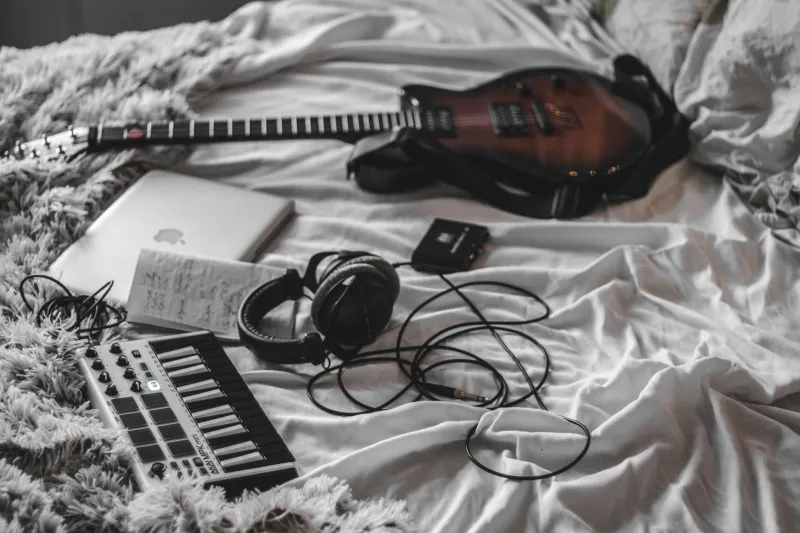
The next time you're blown away by an artist you've never heard of — someone who seems to have emerged fully formed from nowhere — do a little digging. More often than not, you'll find years of quiet work behind the apparent overnight success. A bedroom studio in a city that doesn't appear on the music industry map. A decade of development that happened entirely off the radar.
The invisibility wasn't a setback. It was the whole point.