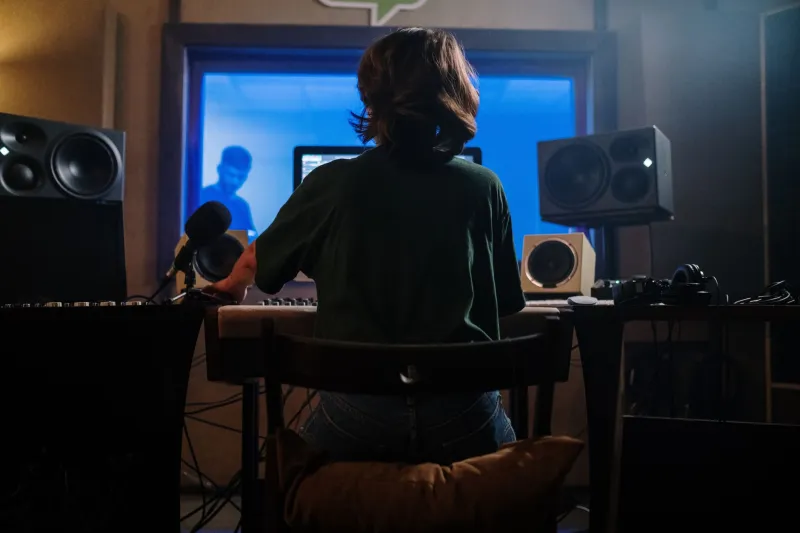
The Invisible Hand in Your Favorite Record: How Swiss Precision Got Into American Pop Without Asking Permission
Let's do a quick experiment. Pull up a song you've been obsessed with lately. Something you've played on repeat until your roommate started giving you looks. Now ask yourself: what makes it sound the way it sounds? Not the lyrics. Not the hook. The actual sonic architecture of it — the way the low end sits, the space around the vocals, the way nothing feels cluttered even when everything is happening at once.
Chances are, you've never thought about it. Most listeners don't. But someone thought about it obsessively, probably for weeks, and the philosophy behind those decisions might surprise you.
European production sensibility — and Swiss engineering culture in particular — has been infiltrating American music in ways that don't show up in the liner notes. It's not a conspiracy. It's just what happens when the world's recording infrastructure becomes truly global and the people who care most about precision find their way into every room that matters.
What "Precision" Actually Sounds Like
When people talk about Swiss precision, they usually mean watches. Fair enough — Bern and its surroundings built a global reputation on the idea that every component matters, that tolerance for sloppiness is tolerance for failure, that the smallest details compound into something either beautiful or broken.
Now apply that to audio engineering.
Swiss-trained producers and engineers approach a mix the way a watchmaker approaches a movement: every element has a purpose, every frequency has a place, and nothing gets added that doesn't earn its presence. The result is a kind of controlled clarity that American listeners have come to expect from their favorite records without knowing why they expect it.
You've heard it in the way a vocal sits just slightly forward without overwhelming the arrangement. You've heard it in the low end that hits hard without turning to mud on your car speakers. You've heard it in the silence between phrases — that fraction of a second that somehow makes the next line land harder.
That's not accident. That's a philosophy.
The Pipeline Nobody Talks About
Here's something that might reframe the way you think about American pop music: a significant portion of what gets mixed and mastered for the US market passes through European hands at some point in the chain. Not all of it. But enough.
Bern and Zurich have cultivated serious audio engineering programs for decades. The graduates of those programs don't all stay in Switzerland — they move, they freelance, they set up remote studios, they get hired by labels who care more about their ears than their passports. And they bring their training with them.
Producer and audio educator Corinne Baumann, who studied in Bern before spending a decade working on international projects, describes it this way: "In Swiss audio culture, you are taught to listen before you touch anything. You sit with a track and you identify what it needs before you start making decisions. American production culture is often the opposite — you start moving things immediately. Both approaches have value, but the Swiss approach tends to create mixes that have longevity."
Longevity. That's an interesting word. Think about the records you still play five years later versus the ones that sounded incredible for three months and now feel dated. There's often a structural reason for the difference.
The Bern Connection Hiding in Plain Sight
Bern specifically has a musical culture that doesn't get nearly enough credit from American listeners. It's not a city that chases trends. It's a city that builds things to last — and that ethos bleeds into the way its musicians and producers approach their work.
When you listen to music shaped by Bern's creative community, you're often hearing something that was designed with patience. Not rushed to meet a release window. Not overproduced to compensate for a weak foundation. Built slowly, with intention, and with the understanding that a record that sounds great in ten years is worth more than one that dominates for ten weeks.
American chart culture doesn't always reward that approach. But American listeners often respond to it without realizing they're responding to something different.
Hearing It Once You Know to Listen
Once you understand what you're listening for, you start to notice it everywhere.
The pop record with the surprisingly wide stereo image that never feels gimmicky. The hip-hop track where the 808 sits so perfectly in the mix that you feel it as much as hear it. The indie folk album where every instrument has its own space and nothing steps on anything else. These aren't happy accidents — they're the result of someone who was trained to think about audio as architecture.
Swiss engineering philosophy treats a mix like a building. Every element is load-bearing until proven otherwise. You don't add a wall just because you have extra bricks. You add it because the structure needs it there.
Compare that to the more-is-more approach that dominates a lot of American production, where tracks get layered until they're dense, where compression is used as a substitute for dynamics, where loudness becomes a proxy for impact. Neither approach is inherently wrong. But when they work together — when American creative instinct gets filtered through European structural discipline — the results tend to be records that live longer in the culture.
What You Can Take From This
You don't need to know who mixed a record to appreciate how it sounds. But understanding that there's a philosophy behind the sound — that someone with a very specific set of values made very specific decisions about every frequency you're hearing — changes the way you listen.
And if you're an artist or producer reading this, it might also change the way you work. The Swiss approach isn't about being cold or mechanical. It's about caring enough to be deliberate. About understanding that every choice you make in the studio is a statement about what you value.
Your favorite song probably has more Swiss DNA than you think. Now you know what to listen for.