Why Some of the World's Best Producers Just Traded Their LA Studios for the Swiss Alps
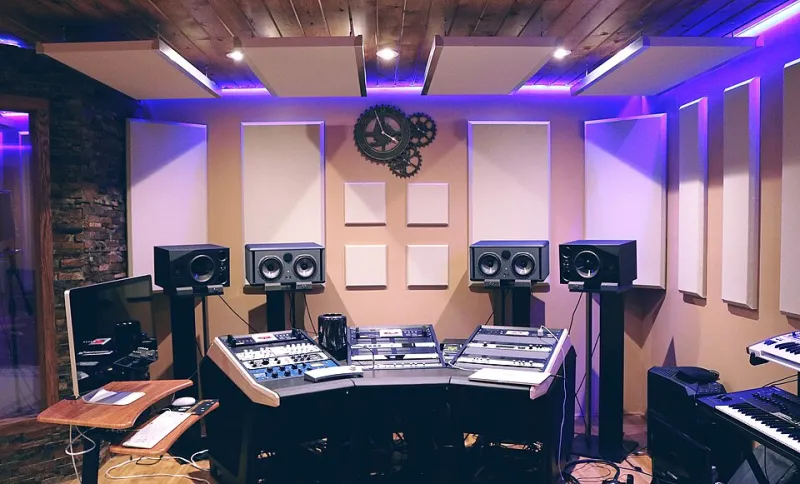
Photo: Dayron Villaverde from Miami, USA, CC0, via Wikimedia Commons
Picture a producer at the peak of their career. They've got credits on records that moved real numbers. They've got a Rolodex full of artists who want to work with them. They've got a studio lease in a neighborhood that used to be gritty and is now just expensive. By every conventional measure, they're exactly where they're supposed to be.
And then they leave.
Not for New York. Not for Nashville. They leave for somewhere most of their industry contacts have to Google — a mid-sized city in Switzerland, a converted space in the mountains, a studio that looks nothing like what you'd expect and sounds like everything you've been chasing.
This is happening more than the industry wants to acknowledge. And the reasons behind it are worth paying attention to.
The LA Problem Nobody Wants to Say Out Loud
Los Angeles is still the center of gravity for American music production, and probably will be for a long time. The infrastructure is real — the session musicians, the mastering houses, the industry relationships, the sheer density of creative talent. Nobody's disputing that.
But there's a conversation happening quietly among producers who've spent years inside that system, and it goes something like this: the environment that's supposed to fuel creativity has started to work against it.
The cost of operating in LA has become genuinely prohibitive. Studio time, housing, the basic overhead of running a creative business — it's all compounded to a point where the financial pressure bleeds into the work itself. When you're burning through money just to keep the lights on, the sessions start to feel different. Decisions get made with one eye on the budget rather than both eyes on the music.
There's also the proximity problem. Being surrounded by the industry — the showcases, the networking events, the constant ambient awareness of what's trending, what's getting signed, what's getting passed on — creates a kind of creative static. It becomes harder to hear your own instincts when you're permanently tuned into the frequency of what everyone else is doing.
What Switzerland Actually Offers
Bern isn't trying to be LA. That's precisely the point.
Producers who've made the move describe a set of practical advantages that compound quickly. The cost of setting up a serious studio space in Switzerland — particularly outside Zurich, in smaller cities with functioning creative communities — is dramatically lower than comparable setups in major US markets. That economic breathing room translates directly into creative freedom. You can take longer on a project. You can experiment without the meter running. You can say no to work that doesn't interest you.
The infrastructure is genuinely strong. Switzerland has world-class acoustic engineering, serious technical expertise, and a music culture that values craft over commerce in ways that show up in the details. The country's reputation for precision isn't just a cliché — it manifests in how studios are built, how equipment is maintained, how sessions are run.
And then there's the thing that's harder to quantify: the quality of attention that becomes possible when you're not constantly context-switching between creative work and industry noise. Multiple producers who've relocated describe a similar experience — arriving with a backlog of half-finished projects, and finding that the new environment allowed them to actually complete things. The mountains don't care about your streaming numbers. That turns out to be useful.
The Creative Community Factor
One of the persistent myths about relocating to a smaller city is that you're trading community for quiet. The reality in Switzerland's music scene is more interesting than that.
Bern in particular has developed a creative ecosystem that punches well above its weight. There are producers, composers, electronic artists, and session musicians operating at a serious level — people who chose this environment deliberately and built something genuine within it. The scene is smaller than LA, obviously, but the density of intention is different. The people who are there are there because they want to be, not because it's where the industry happens to be located.
For producers who've spent years in environments where collaboration is transactional — where everyone is perpetually calculating what a session is worth to their career — the contrast can be jarring in the best possible way. The conversations are different. The sessions feel different. The work that comes out of them sounds different.
Geography as Influence
This is the part that sounds mystical until you actually spend time there. The physical environment of Switzerland — the scale of the landscape, the quality of the light, the particular silence that exists in alpine spaces — does something to the creative process that's difficult to articulate but consistent across accounts.
Producers describe making different sonic choices. Reaching for space in a mix where they previously would have filled it. Letting sounds breathe in ways that felt uncomfortable in the compressed sonic world of LA production. Being drawn toward textures and timbres that reflect something about the environment they're working in.
This isn't magic. It's the documented influence of environment on creative output — the same reason writers relocate to retreats, the same reason certain recording studios have reputations that go beyond their equipment. Where you make something shapes what you make. Switzerland, it turns out, has a particular influence on sound.
What This Means for American Music
The producers who've made this move aren't leaving American music behind — they're bringing what they find in Europe back into it. The records being made in Swiss studios are finding American audiences, shaping American tastes, influencing the direction of genres that get consumed in the US.
In that sense, the migration isn't a brain drain. It's more like a creative circuit — talent that gets recharged somewhere unexpected and returns with something new to offer.
For American listeners, the practical takeaway is simple: some of the most interesting production work being done right now is happening in places that don't show up on the standard industry map. And the artists willing to follow their collaborators there, or to seek out what those environments produce, are accessing something that the LA system can't replicate.
The Alps don't have a Spotify algorithm. That might be exactly why the music coming from there sounds so alive.