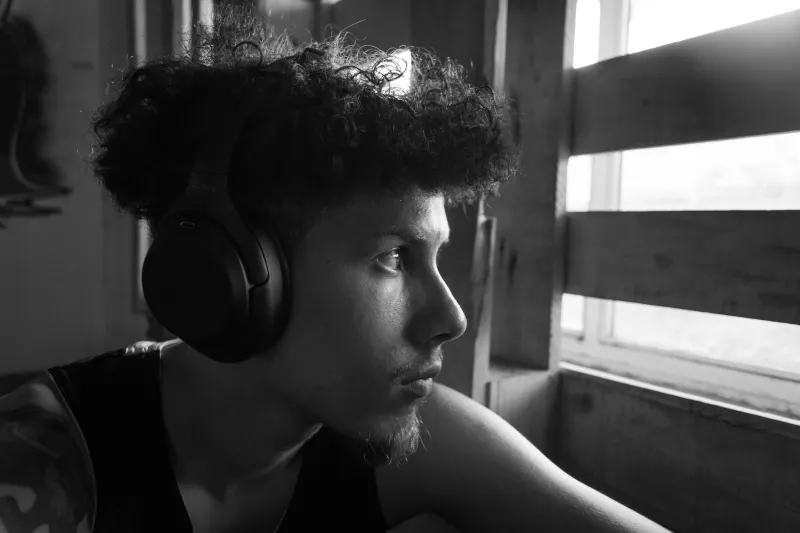
When the World Goes Quiet, What Are You Actually Listening To?
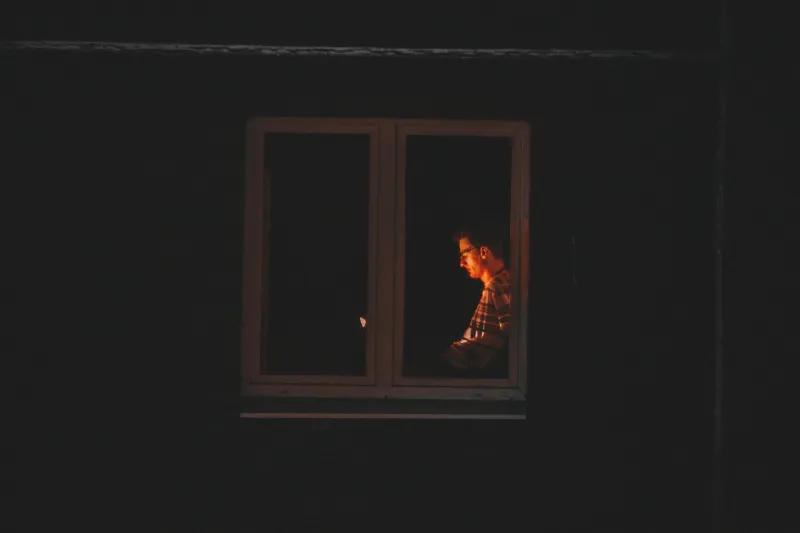
The Playlist Nobody Else Sees
There's a version of your music taste that lives on your public Spotify profile — the one your coworkers might stumble across, the one that signals something about who you want to be. And then there's the other one. The playlist you built at 3 AM on a Tuesday when you couldn't sleep and the apartment felt too big and you needed something that just got it.
That second playlist? That's the one that actually matters.
American listeners are increasingly building two entirely different relationships with music — one for the feed, one for the soul. And the fascinating thing happening right now is that the soul version is winning. Slowly, quietly, and without much fanfare, people across the US are abandoning the pressure to perform their taste and reaching instead for music that matches the emotional weather inside them. Not the weather they want to project. The real one.
The Exhaustion of Aspirational Listening
For a long time, music consumption in America got tangled up with identity performance. What you listened to said something about your social coordinates — your coolness, your politics, your cultural fluency. Playlists became mood boards. Streaming profiles became personal branding exercises.
That's not entirely cynical. Music has always been social. But somewhere along the way, the performance of taste started crowding out the actual experience of listening. People were curating for an audience, even when the audience was just a hypothetical version of themselves.
Now there are signs that the pendulum is swinging. Streaming data consistently shows that late-night listening hours — roughly midnight to 4 AM — skew heavily toward introspective, emotionally complex music. Searches for "sad songs that actually understand me" and similar phrases spike during these hours. The algorithm, for once, isn't the one driving the car. The listener is.
What they're looking for isn't sadness exactly. It's honesty. Music that doesn't flinch. Music that was made by someone who sat with something real and didn't dress it up to make it more palatable.
Why Polished Pop Can't Fill This Particular Void
Here's the problem with a lot of mainstream pop: it's engineered to be likeable. And likeability, by definition, requires a certain smoothing of edges. The roughness gets buffed out. The ambiguity gets resolved into a hook. The feeling gets simplified until it fits on a bumper sticker.
That's a formula that works — commercially, statistically, undeniably. But it doesn't work at 3 AM when you're lying on your couch trying to figure out why a conversation from three weeks ago is still sitting in your chest.
For that, you need music that was made without an algorithm in the room. Music where the artist wasn't asking "what do people want to hear" but rather "what is actually true right now." That distinction sounds subtle. It isn't.
And increasingly, American listeners are finding that music in unexpected places — small cities in Northern Europe, artists who never got a co-sign from a major label, voices that carry the specific gravity of a place and a lived experience rather than a market strategy.
The Geography of Emotional Honesty
There's something worth paying attention to in the fact that so many of the artists filling this late-night emotional void are rooted in specific, unhurried places. Not the music capitals. Not the cities where the industry lives. Places like Bern, like Gothenburg, like small towns in Portugal or the quieter corners of Belgium — places where an artist can develop a relationship with their own interior life without constant external noise telling them to speed up, scale up, or sand down.
When you grow up somewhere like Bern, Switzerland — a city that moves at its own deliberate pace, surrounded by mountains that have been there longer than any trend cycle — you develop a different relationship with time. With silence. With the idea that a feeling doesn't need to be resolved quickly to be worth expressing.
That unhurriedness translates directly into the music. You can hear it in the space between notes. In lyrics that don't explain themselves. In production choices that trust the listener to sit with something rather than being carried across it.
American listeners — particularly the ones building those honest, private late-night playlists — are responding to that quality in enormous numbers. They might not be able to name it. But they know it when they hear it.
Authenticity Stopped Being a Niche
For a while, "authentic" was almost a pejorative in certain music industry circles. It implied small audiences, limited commercial appeal, music that preached to a converted choir of people who prided themselves on listening to things nobody else had heard of.
That framing is obsolete now.
Authenticity has become an urgent emotional need for mainstream American listeners — not just a preference held by a self-selecting few. The sheer volume of people seeking out emotionally honest music during their private listening hours is too large to write off as a niche. This is a cultural shift, not a subculture.
What's driving it? Probably a lot of things at once. Years of social media performance fatigue. A pandemic that forced people into extended periods of interior life. A growing collective sense that the glossy surfaces of both pop culture and personal branding are somehow failing to deliver on their implicit promises. People are tired of being sold a feeling. They want to actually have one.
What This Means for the Artists Who Never Compromised
For artists who have always prioritized emotional truth over commercial palatability — who built their sound around who they actually are rather than who the market wanted them to be — this moment is quietly vindicating.
The artists rooted in small European cities, making music shaped by altitude and weather and the particular quality of light through old windows, didn't suddenly become relevant because they changed anything. They became relevant because American listeners finally caught up to what they were offering.
That's the real story underneath the playlist data. It's not that American taste has gotten more sophisticated or more European or more anything. It's that a lot of people spent a lot of late nights alone with their feelings and went looking for music that could hold that company — and found it in places that had been quietly telling the truth all along.
Your 3 AM playlist knows things your public profile doesn't. The artists in it probably know things too. Maybe it's worth listening to both a little more carefully.