Switzerland Is the World's Best-Kept Secret for Serious Music Production — and Producers Are Finally Catching On
Switzerland Is the World's Best-Kept Secret for Serious Music Production — and Producers Are Finally Catching On
For decades, the music industry's gravitational centers have been fixed and familiar. You made it in LA or you made it in New York. Maybe Atlanta. Maybe Nashville if you were tilting country. The idea that a landlocked country in the middle of Europe — one more associated with neutral diplomacy and precision watchmaking than boundary-pushing sound — could be pulling serious producers away from those cities would have seemed absurd ten years ago.
It doesn't seem absurd anymore.
Something is shifting. Quietly, methodically — very Swiss, actually — Switzerland has been building a reputation among a certain kind of music producer. Not the kind chasing chart positions or streaming algorithm wins. The kind who books a studio for three weeks and actually uses all three weeks. The kind who flies fourteen hours not because they have to, but because something about the work demands it.
So what exactly are they finding when they get there?
The Studio as Sanctuary, Not Factory
Let's start with the physical reality. Swiss recording infrastructure is, by any honest measure, extraordinary. Studios in Zurich, Geneva, and Bern were built with the same obsessive attention to craft that defines Swiss manufacturing broadly — acoustic architecture treated not as a technical checkbox but as an art form in itself. The rooms breathe differently. Producers who've worked in both worlds describe a quality of silence in Swiss studios that you simply don't encounter in LA, where the ambient noise of a city perpetually in motion seeps into everything.
But it's not just the rooms. It's the philosophy behind them. Swiss studios tend to operate outside the frantic hustle-or-die tempo that governs sessions in major American cities. There's no culture of squeezing four clients into a single day, no pressure to wrap by midnight so the next act can load in at dawn. When a producer books time, they get time — real, uninterrupted, unhurried time. For artists working through genuinely complex sonic ideas, that distinction is everything.
Geography as a Creative Force
Here's something that gets underestimated constantly: the landscape itself is doing something to the music.
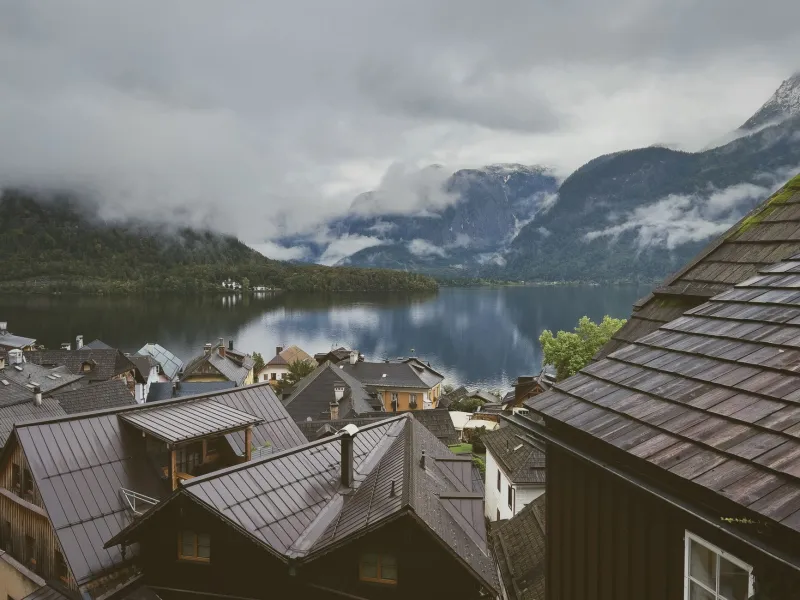
Switzerland's topography is not subtle. The Alps don't just sit in the background — they define the psychological atmosphere of the country. There's a particular quality to working in a city like Bern, where you can look up from a mixing board and see mountains so massive they reframe your sense of scale entirely. Producers describe a kind of creative recalibration that happens almost involuntarily. The grandiosity of the surroundings has a way of making you want to match it — to reach for something in the music that isn't small or safe or immediately comfortable.
Then there's the quiet. Not studio quiet. Country quiet. The kind that follows you out of the session and into the evening. In LA, you leave a studio and you're immediately back inside the machine — traffic, noise, the ambient buzz of a city that never fully exhales. In Switzerland, you step outside and the world genuinely slows down. That decompression time turns out to be creatively essential. Ideas that got planted during a session actually have space to grow overnight.
The Cultural Patience Factor
This one is harder to quantify but impossible to ignore. Swiss culture has a fundamentally different relationship with time and process than American creative culture does. There's no glorification of the all-nighter. No bragging rights attached to how fast you can turn something around. The cultural default is craftsmanship over speed, and that value system permeates the studio environment in ways both obvious and invisible.
American producers who've spent time working in Switzerland often describe a kind of permission they didn't realize they needed — permission to go slow. To sit with a sound for a day before deciding whether it belongs. To question a choice they made yesterday without feeling like they're falling behind. The Swiss approach to creative work isn't precious or pretentious. It's just patient. And patience, it turns out, is one of the rarest and most valuable things a producer can access.
There's also a multilingual, multicultural texture to Swiss creative life that feeds something specific. Switzerland sits at the intersection of German, French, and Italian cultural traditions, and that layered identity produces artists and collaborators who think fluidly across borders. For producers looking to push their sound into genuinely new territory, working alongside Swiss musicians and engineers means working with people who've been code-switching culturally their entire lives. That kind of fluency shows up in the music.
What Gets Made There
The output speaks for itself, even if the country doesn't always get the credit. Swiss studios have contributed to projects across electronic music, jazz, classical crossover, and experimental pop that have quietly shaped what adventurous listeners consider possible. The work tends to have a particular quality — spacious, considered, architecturally sound in a way that holds up across dozens of listens.
Producers who've made the trip describe coming home with music that surprised them. Not because Switzerland handed them something they couldn't have made elsewhere, but because the conditions removed the noise — literal and psychological — that was getting between them and their best work.
That's the real thing Switzerland is offering. Not a magic formula. Not some exotic ingredient that doesn't exist in Brooklyn or Burbank. It's the subtraction of everything that was in the way.
Why This Matters for American Music
For American listeners, the Switzerland production story is a useful mirror. We've built a music industry that moves at the speed of content, that rewards output over depth, that treats patience as a liability. The fact that serious producers are flying to a small Alpine country specifically to escape that pressure says something uncomfortable about what we've optimized for — and what we've lost in the process.
The music coming out of those Swiss sessions tends to land differently. It asks more of you. It rewards the kind of attention that streaming culture has been quietly training us to withhold. And in a moment when American listeners are increasingly hungry for something that feels genuinely real, that distinction matters.
Switzerland was never trying to be a music industry hub. It didn't build studios to compete with Abbey Road or Electric Lady. It just built them the way Switzerland builds everything — with care, with precision, and with absolutely no interest in cutting corners.
Turns out, that's exactly what the best producers in the world were looking for.