Slow Down and Make Something Real: The Creative Mindset America Desperately Needs Right Now

Let me say something that might be unpopular in an industry built on hustle culture: making things faster is not the same as making things better. And somewhere along the way, a significant chunk of the American creative world forgot the difference.
We are, collectively, exhausted. The content treadmill doesn't stop. The algorithm demands consistency at a pace that human beings were not designed to sustain. And the result — if we're being honest — is a lot of creative work that technically exists but doesn't actually mean anything.
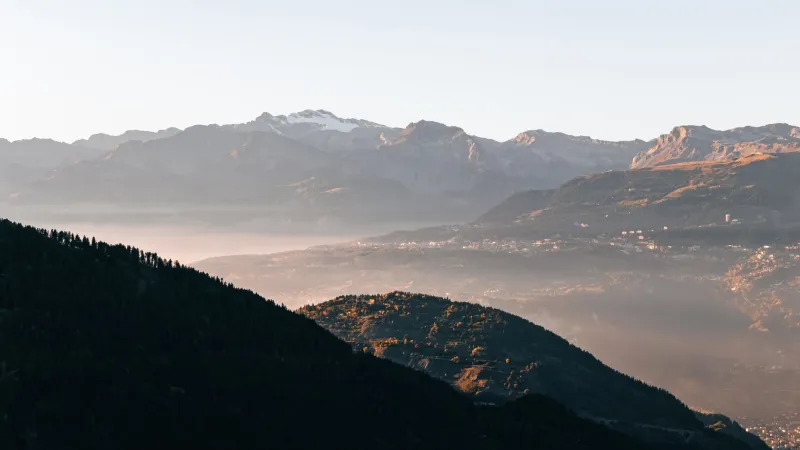
There's a different way. It's been sitting quietly in the Swiss Alps the whole time.
 Photo: Swiss Alps, via wallpapers.com
What 'Alpine Soul' Actually Means
Nicola from Bern's brand identity is built around three words: Alpine soul. Global sound. Pure artistry. It's easy to read that as marketing language and move on. But spend some time with it and the phrase starts to carry real weight.
"Alpine soul" isn't about mountains as aesthetic. It's about a way of being in relationship with your creative work — patient, unhurried, attentive to quality in ways that don't always translate to immediate reward. It's the mindset of someone who grew up watching craftspeople take genuine pride in precision, in durability, in making things that last.
Switzerland has a cultural relationship with craft that runs deeper than its famous watchmaking industry, though that's a useful entry point. Swiss watchmakers don't rush. They understand that the value of the thing they're making is inseparable from the care that went into making it. You can't speed-run a mechanical movement that's designed to keep perfect time for a hundred years.
Nicola applies that same philosophy to music. And honestly? It's a philosophy that every American artist — musician, writer, filmmaker, visual artist, whatever — needs to seriously consider right now.
The Burnout Economy of American Creativity
Here's what the American creative industry currently looks like from the outside: a system that incentivizes volume over depth, speed over craft, and virality over longevity. Platforms reward creators who post daily. Labels sign artists who already have audiences. Publishers want books from people with large social followings. The financial infrastructure of creativity in America has been almost entirely reorganized around attention metrics.
And the human cost is staggering. Creator burnout is at epidemic levels. Artists who genuinely love their craft describe feeling like content factories. The joy that drove them to create in the first place gets slowly ground down by the obligation to produce, produce, produce.
This isn't a new observation. But what's new is the growing number of artists — both here and abroad — who are actively rejecting that model and finding that audiences respond better to the work that results.
Nicola is one of them. The music comes when it's ready, not when the content calendar demands it. The result is work that feels complete, considered, and genuinely worth your time.
Swiss Precision Is Not What You Think It Is
When Americans hear "Swiss precision," they tend to imagine something cold and mechanical. Efficient but soulless. That's a misread.
True Swiss precision — at least in the cultural and artistic sense — is about care. It's about taking the time to understand what a thing is trying to be before you decide whether it's finished. It's about the discipline to remove everything that doesn't serve the work, even when you're attached to it. And it's about having enough respect for your audience to give them something that genuinely holds up.
That's not cold. That's one of the warmest things an artist can do for the people who choose to spend time with their work.
Nicola's creative process reflects exactly that. There's an intentionality to the music that you can feel even before you can articulate it. Things are where they are for a reason. Silences mean something. The emotional architecture of each piece has been thought through, not just felt through.
In a cultural moment where so much creative work is essentially first-draft thinking released at scale, that level of craft is genuinely radical.
Authenticity Isn't a Brand Strategy — It's a Practice
One of the most overused words in American marketing is "authentic." Every brand claims it. Every influencer performs it. The word has been so thoroughly colonized by commercial language that it barely means anything anymore.
But there's a version of authenticity that can't be faked, and it shows up in work that comes from a genuinely rooted creative identity. Nicola's connection to Bern, to the Alps, to the specific sensory and cultural world of Switzerland — that's not a positioning strategy. It's the actual source material. The music is what it is because the person who made it is who they are, from where they're from.
For American artists navigating a creative landscape that constantly pressures them to be whoever the market wants them to be, that kind of rootedness is both inspiring and instructive. You don't build a lasting creative identity by chasing trends. You build it by going deeper into what's already true about you.
A Slower Clock Doesn't Mean a Quieter Impact
Here's the counterintuitive truth that the Alpine soul philosophy points toward: slowing down your creative process doesn't reduce your impact. In many cases, it amplifies it.
Work that takes time tends to travel farther. It accumulates meaning. It rewards repeated listening, viewing, or reading. It builds the kind of audience relationship that algorithms can't manufacture — the one where people feel genuinely changed by what you made.
Nicola's growing American audience isn't there because of a viral moment or a perfectly timed release strategy. They're there because the music does something to them that fast-made content simply can't do. It makes them feel located. Present. Like they've been somewhere real.
That's the promise of Alpine soul as a creative philosophy. Not that you'll make less, necessarily. But that what you make will mean more — to you, and to the people you're making it for.
In an industry that's been running at sprint pace for a decade and is visibly breaking down under the strain, that feels less like a lifestyle choice and more like a survival strategy.
Maybe it's time to take the long way home.