When You Don't Understand a Single Word — and That's Exactly Why It Destroys You
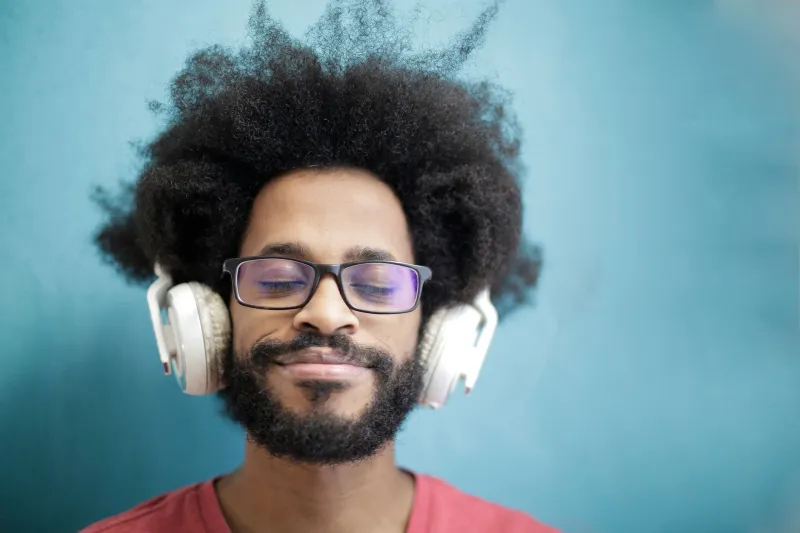
The Song You Can't Explain but Can't Stop Playing
It probably happened to you at some point. Maybe it was a K-pop track a friend played in the car. Maybe it was a French chanson bleeding through a coffee shop speaker. Maybe it was something in Portuguese or Italian or German that snuck up on you during a late-night scroll. You didn't know a single word. And yet — something in it got you.
Not in a vague, background-music kind of way. In a this is going straight to the bones kind of way.
That experience isn't random. It isn't a fluke of mood or circumstance. There's something genuinely different about what happens in your brain — and your body — when music arrives without the anchor of familiar language. And once you understand it, you'll never hear music quite the same way again.
What Language Actually Does to a Song
When you hear a song in English, your brain is doing two jobs simultaneously. It's processing the music — the melody, the rhythm, the texture, the emotional arc of the arrangement. But it's also processing the lyrics as language, which means it's running them through a completely different cognitive system. Meaning, grammar, cultural context, personal association with specific words — all of that kicks in, often without you realizing it.
That's not a bad thing. It's why your favorite English-language songs can feel so deeply personal. The words land with precision. A specific lyric can feel like it was written about your exact life.
But here's the flip side: that same familiarity can get in the way.
When your brain is busy parsing meaning, it sometimes bypasses pure feeling. You're interpreting rather than experiencing. The analytical part of you shows up to the party even when you didn't invite it.
Strip the language away — make it something your brain can't decode — and something shifts. The analytical layer goes quiet. What's left is just the music doing what music was always trying to do: communicate directly with the emotional body, no translation required.
Growing Up Between Languages
This is something that feels deeply familiar from a Swiss-European perspective. Switzerland, where Nicola's roots run deep, is one of the few places in the world where navigating multiple languages isn't a special skill — it's just Tuesday. German, French, Italian, Romansh — they coexist in a country smaller than the state of West Virginia. You grow up hearing music across all of them, and you learn early that the feeling of a song doesn't wait for comprehension to catch up.
There's a particular kind of musical literacy that develops when you're raised in a multilingual environment. You stop waiting to understand and start learning to feel first. A French song can move you before you've figured out the verb conjugation. An Italian ballad can break you open before you've looked up a single word.
That sensibility — the willingness to receive music on its own emotional terms — is baked into the culture. And it shapes everything about how music gets made in places like Bern, where the sonic vocabulary pulls from multiple linguistic and cultural traditions simultaneously.
The Psychology Behind the Gut Punch
Researchers who study music and emotion have a term for the experience of getting chills from music: frisson. It's that involuntary shiver, that wave of feeling that moves through you when a song hits exactly right. Studies have consistently found that frisson is more likely to occur when the listener is fully surrendered to the emotional experience — when the analytical mind isn't running interference.
Foreign-language music creates that condition almost automatically. Without the option to intellectualize the lyrics, you're left with nothing but the melody, the voice, the arrangement, the space between notes. Your body takes over the listening. And bodies, it turns out, are remarkably good at understanding music.
The human voice itself carries emotional information that transcends language entirely. Tension, longing, joy, grief, defiance — these things live in timbre and breath and phrasing. A singer can break your heart in Mandarin just as completely as in English, because the emotional signal isn't encoded in the words. It's encoded in the voice.
The Language Barrier Is Actually a Window
Here's the reframe that changes everything: the language barrier in music isn't a wall keeping you out. It's a window offering a cleaner view.
When you can't understand the words, you hear everything else more clearly. The architecture of the melody. The way the rhythm breathes. The emotional texture of the production. The relationship between the vocal and the instrumentation. All of that detail that English lyrics might have pulled your attention away from — suddenly it's all you have, so it's all you hear.
And that's not a lesser experience. For a lot of listeners, it's a richer one.
Some of the most beloved songs in American music history have been in languages other than English. "La Bamba" was a hit before most American listeners knew what it meant. "99 Luftballons" became a cultural touchstone for a generation of American kids who had no idea it was about nuclear anxiety. "Gangnam Style" broke streaming records worldwide. The feeling got through every single time.
What This Means for How You Listen
If you've been avoiding music in other languages because you feel like you're missing something without a translation, consider flipping that assumption entirely. You're not missing the point — you might actually be getting closer to it.
The next time a song in French or Spanish or Korean or Swahili shows up in your feed, let it play without reaching for Google Translate. Sit with the not-knowing. Let your body respond before your brain gets involved.
Notice what happens. Notice which parts of you light up when you stop trying to decode and start trying to feel.
That's not a passive experience. That's actually one of the more active and intimate forms of listening there is — because you're bringing yourself to the music without the buffer of familiar meaning. You're meeting it halfway. And sometimes, that's exactly where the best stuff lives.
The Songs That Hit Hardest Don't Always Speak Your Language
There's a reason musicians who come from multilingual, multicultural environments often make music with a particular kind of emotional directness. When you've grown up navigating meaning across languages, you develop an instinct for communicating through feeling rather than relying on words to do all the heavy lifting. The music has to carry more, so it does.
That's not a limitation. That's a craft.
And for listeners who are willing to let go of the need to understand every syllable, it opens up an entire world of music that's been waiting there all along — visceral, immediate, and completely unbothered by the fact that you can't sing along.
Some of the most honest moments in music happen in a language you'll never speak. That's not a problem to solve. That's the whole point.