Boise, Asheville, Bern: The Small-City Blueprint for Making Artists the World Can't Ignore
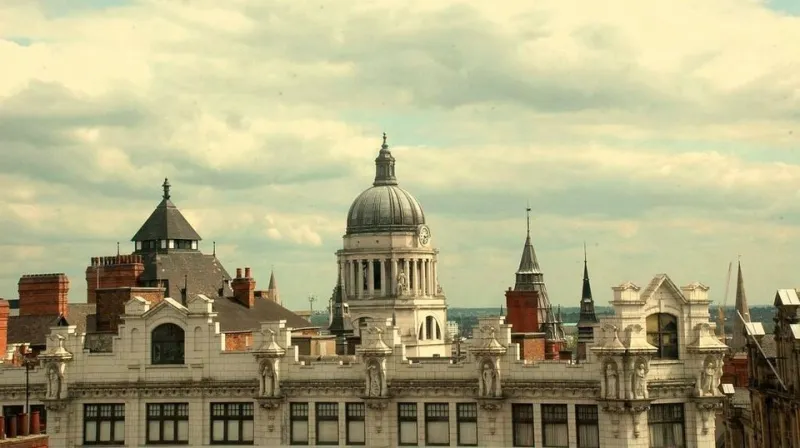
Photo: Willednic at English Wikipedia, CC BY 3.0, via Wikimedia Commons
Let's start with an uncomfortable stat for the big coastal hubs. Bern, Switzerland — population roughly 130,000, famous internationally for bears and bureaucracy — has produced a string of internationally recognized artists and producers completely out of proportion to its size. Scale that per capita against American metros ten times larger, and the numbers get embarrassing. Meanwhile, on the other side of the Atlantic, Asheville, North Carolina (pop. ~95,000) and Boise, Idaho (pop. ~240,000) are quietly doing the same thing: exporting sounds that don't sound like anywhere else.
I've spent years thinking about why. I think there's a pattern, and it's repeatable.
Pattern One: Isolation Forces an Accent
In Los Angeles or Nashville, you breathe the same musical air as everyone else. Trends arrive before they're trends. The result, statistically, is convergence — a hundred artists chasing the same reference tracks.
In Bern, the reference tracks arrive late and half-remembered. So young musicians fill the gaps with what's around them: Alpine folk structures, the metronomic precision of Swiss daily life, the strange melancholy of a city built on a river bend. Isolation doesn't limit a sound — it gives it an accent. And accents are what travel. Nobody remembers the artist who sounded like the playlist. They remember the one who sounded like a place.
Boise knows this. Asheville knows this. When your scene is too small to hide in, you either quit or you get unmistakably specific.
Pattern Two: Cheap Rent Is Creative Infrastructure
The most underrated A&R tool in the world is an affordable apartment with a spare room.
Bern's modest cost of living (by Swiss standards, and certainly compared to New York or LA) means an artist can hold a day job, pay rent, and still have time and headspace to develop slowly. No label breathing down your neck. No need to chase the sync-friendly single by Q3. You can spend three years on a record that only forty people will hear — and those forty people will tell forty more.
Compare that to the American big-city model, where the rent itself dictates the art. When your deadline is the first of the month, you don't take risks. Small cities quietly subsidize experimentation.
Pattern Three: A Scene Small Enough to Be a Family (and a Sparring Partner)
Here's the part outsiders get wrong: small scenes aren't cozy. They're intense. In Bern, every serious musician knows every other serious musician. You've seen each other bomb. You've borrowed each other's amps and dated each other's friends. That proximity produces brutal honesty — and brutal honesty is the best producer in the world.
Big cities offer networking. Small cities offer accountability. You can't ghost a scene of thirty people who'll see you at the bakery tomorrow morning.
The Lesson for American Artists
If you're an artist in a mid-sized American city feeling like you're missing out by not being in Nashville or Brooklyn — flip it. You're not missing the scene. You're missing the noise, which is a different thing entirely.
The playbook from Bern, Boise, and Asheville looks like this: stay where the rent is survivable, lean into what only your region sounds like, and build a small circle sharp enough to tell you the truth. The world doesn't need another artist from the biggest city. It needs an artist from somewhere.
Bern pop. 130,000. Grammys and global catalogs: more than cities ten times its size. That's not luck. That's a blueprint — and it's sitting in mid-sized America right now, waiting to be noticed.