Breathing Room: What Music Loses When Every Second Gets Filled
There's a moment in certain songs where everything drops away. The drums fall out. The melody suspends itself mid-breath. And for one or two or maybe three seconds, there's just — nothing. Or at least, nothing you can point to on a waveform.
That moment, if you've ever felt it, hits differently than any drop, any hook, any perfectly engineered chorus. It reaches into your chest and does something that a thousand layered synths can't replicate. It makes you feel like the music knows you're there.
Here's the thing: that silence isn't accidental. It's a decision. And in today's production landscape, it might be the bravest one a musician can make.
Why American Pop Declared War on Empty Space
Stream any major American pop release from the last five years and run a quick mental experiment — try to find a moment where nothing is happening. Not a transition, not a riser, not a background texture keeping the sonic floor warm. Just genuine, deliberate quiet.
You probably won't find one. And that's by design.
The logic is straightforward, if a little depressing: streaming platforms reward engagement, engagement is measured in seconds before a skip, and silence — even a half-second of it — reads as a risk. So producers fill every available space. Layers stack on layers. Frequencies that the average listener will never consciously register get loaded into the low end anyway, because the absence of anything feels like a mistake to be corrected.
The result is music that's technically impressive and emotionally exhausting. It's the audio equivalent of a conversation where the other person never stops talking. You walk away feeling like something happened, but you're not sure you were actually heard.
The Swiss Relationship With Intentional Restraint
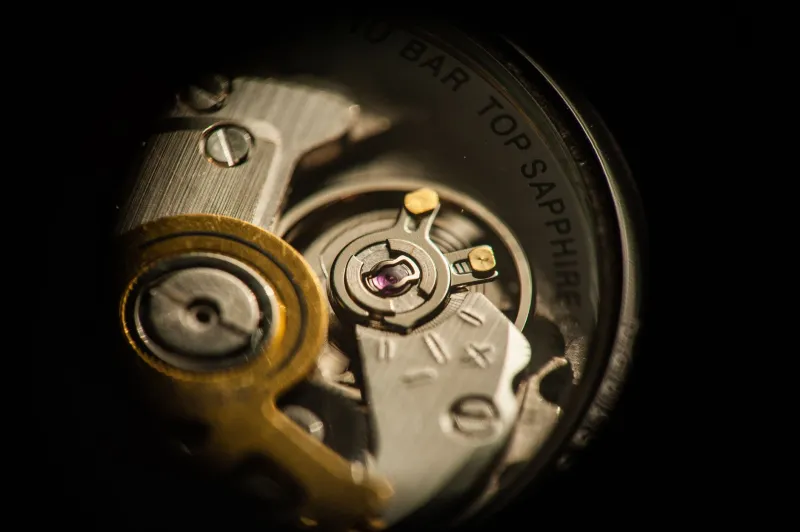
Growing up in Bern, you absorb a particular cultural relationship with precision — not as coldness, but as care. Swiss craftsmanship, whether you're talking about watchmaking or architecture or music, operates on the principle that what you leave out is just as deliberate as what you put in. A watch movement has exactly the components it needs and none that it doesn't. A building facade earns its negative space.
This translates into a musical philosophy that treats the pause not as a failure of momentum but as its own kind of statement. When a Swiss producer leaves four bars of near-silence in the middle of a track, they're not forgetting to fill it. They're trusting you to feel something in that gap — and trusting themselves enough to let you.
That kind of trust is rare. It requires a belief that the listener is paying attention, that the emotion has been built carefully enough to survive a moment without reinforcement, and that the music doesn't need to be constantly proving itself to hold your interest.
The Pause as Punctuation
Think about how language works. A sentence without any punctuation is technically readable but exhausting to process it runs together and the meaning starts to blur because nothing tells you where to breathe or what to emphasize or when one idea ends and another begins. Punctuation isn't decoration. It's structure. It's how meaning gets delivered.
Silence in music works exactly the same way. The pause before a chorus tells you something important is coming. The space after a lyric gives the words room to land. The moment where a solo instrument plays alone, stripped of everything else, lets you hear what the song is actually about underneath all the production choices.
Artists who understand this — and there are more of them than the mainstream would suggest — use silence as punctuation. They know that a held note followed by nothing is more emotionally loaded than a held note followed by another layer of sound. They're not minimalists for aesthetic reasons. They're strategists who understand how human attention and emotion actually function.
Listening Differently: Treating the Gap as the Point
Here's a small experiment worth trying. Pick a song you genuinely love — not something you think you should love, but something that actually gets to you. Listen to it once the way you normally would. Then listen again, but this time pay attention specifically to the moments where things drop away or thin out. Where does the production pull back? Where does a single instrument carry the weight alone? Where does the vocal breathe?
Chances are, those are the moments you've been responding to without consciously registering why. The emotional peak of a song is rarely the loudest part. It's usually the part just before or just after — the inhale before the release, or the exhale after.
Once you start hearing it that way, it's hard to unhear. You start noticing when songs are crowding you, filling every second because they don't trust the music to hold up on its own. And you start noticing when an artist is genuinely confident — confident enough to leave room for you to feel something without being told exactly what to feel.
The Artists Getting This Right
This isn't a European-only phenomenon, though the cultural conditions that produce it are more common outside the American mainstream. You hear it in Bon Iver's production choices — the way Justin Vernon will pull everything back to a single voice and a single texture right when you'd expect a crescendo. You hear it in certain tracks from James Blake, where the space between sounds is as loaded as the sounds themselves.
You also hear it in a generation of European artists who never internalized the American anxiety about silence. Artists from cities like Bern, Oslo, Amsterdam — places where the culture values considered expression over constant output — are producing work that earns its emotional weight precisely because it doesn't try to manufacture it through sheer density.
These aren't artists making lo-fi bedroom recordings because they can't afford better. These are technically sophisticated musicians making a deliberate choice to trust the gap.
What Gets Lost When We Fill Everything In
The cost of crowding out the pause isn't just aesthetic. It's emotional. Music that never breathes doesn't give the listener a chance to bring anything to it. The most lasting songs — the ones people return to years later because they feel different every time — are the ones that leave room for interpretation, for projection, for the listener's own experience to enter the frame.
When a song is so densely produced that every emotional cue is spelled out and every frequency is occupied, there's nowhere for you to go. You receive it, maybe you enjoy it, and then it's over. But a song with real space in it? That song grows with you. It sounds different at 22 than it does at 35 because you're different, and the song was quiet enough to let you in.
The pause isn't where the music stops. It's where the music finally has room to mean something.
So next time a song holds its breath — let it. Sit in that gap for a second. That's not dead air. That's the whole point.