What Happens in the Studio at 2 A.M. Stays in the Studio — Until It Changes Everything
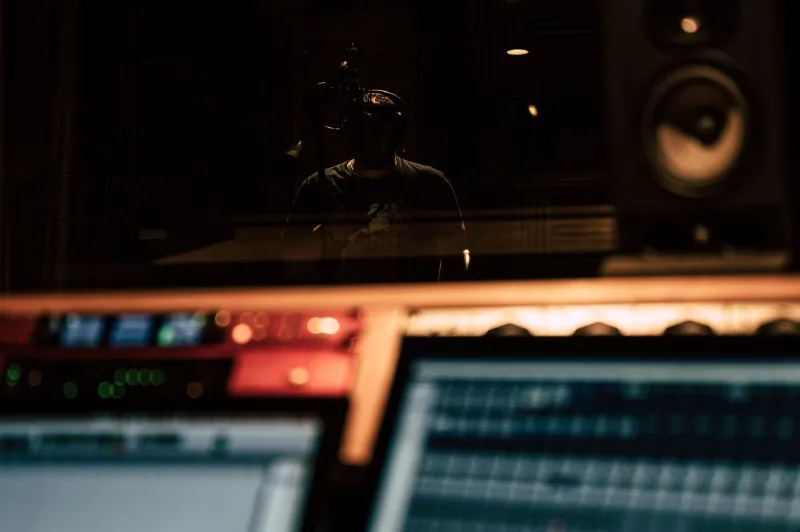
There's a version of yourself that only comes out when nobody's watching. Not the polished version you bring to the session with the label rep in the room. Not the one that's quietly monitoring how a take might sound as a clip. The other one — loose, a little tired, unconcerned with outcomes. That's the version that makes the music worth keeping.
It's a strange paradox, and anyone who's spent real time creating knows it intimately: the moment you stop trying to make something great, something great has a chance of actually happening.
The Invisible Audience That's Killing Your Best Work
American music culture has a visibility problem. And I don't mean that in the cynical, everything-is-content way people have been complaining about for years. I mean something more subtle and more damaging — the internalized audience. The one that lives inside an artist's head even when the room is empty.
We've built an industry, and honestly a whole creative culture, around the assumption that making something is inseparable from showing it. The moment an idea forms, a part of the brain is already running the numbers: Will this work on a reel? Is this a relatable moment? Does this have a hook in the first eight seconds? That internal broadcast is running 24/7 for a lot of artists, and it's quietly strangling the work before it even has a chance to breathe.
The result isn't bad music, exactly. It's correct music. Competent music. Music that checks the boxes without ever wandering into the territory where something genuinely unexpected might happen.
What Switzerland Taught Me About Privacy in the Creative Process
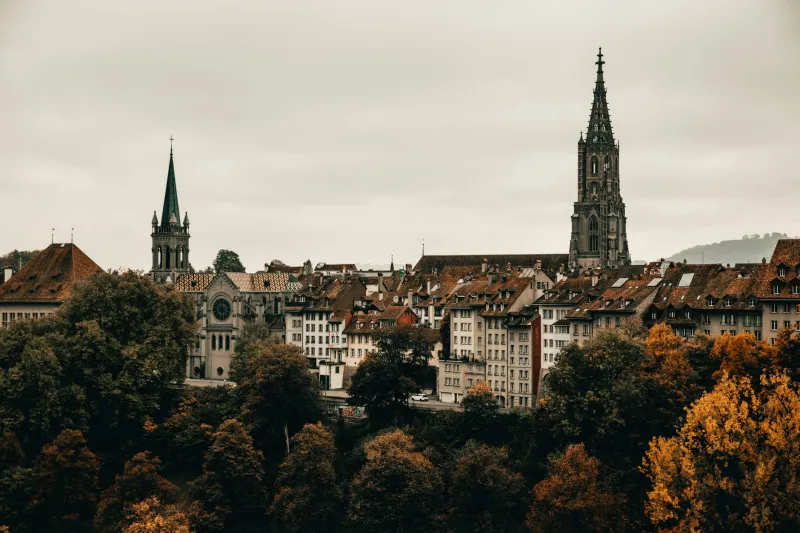
Growing up in Bern, I absorbed something about craft that I didn't fully understand until I started working with artists from other places. There's a cultural comfort with the private process — with doing something slowly, carefully, and without announcing it. Swiss culture doesn't perform its discipline. It just practices it, quietly, until the thing is ready. And sometimes the thing is never supposed to be ready for anyone else. Sometimes the making is the point.
That might sound almost too reserved for an American audience raised on the idea that if you've got it, show it. But there's something genuinely freeing about the concept of creative privacy. When a piece of work isn't for anyone, it doesn't have to justify itself. It can be weird. It can be unfinished. It can go somewhere structurally strange and stay there, because there's no one waiting at the end of the tunnel expecting a chorus.
Some of the most interesting music I've ever been part of — or heard from artists I deeply respect — came from exactly that space. Late nights, low stakes, no agenda. Someone picks up an instrument because they couldn't sleep. Someone starts layering sounds because the session officially ended two hours ago and they just wanted to try one more thing. Nobody's recording for release. And then suddenly, they are.
The Accidental Masterpiece Problem
Here's what's interesting about those moments: they're not actually accidents. They feel spontaneous, but they're the product of accumulated hours, internalized technique, and a creative subconscious that's been quietly working the whole time. The "accident" is really just what happens when the conscious, self-monitoring mind finally gets out of the way.
There's a reason so many artists, when asked about their most beloved work, describe making it in a state of almost dissociative focus. They weren't thinking about the audience. They weren't thinking about the market. They were barely thinking at all in the analytical sense. They were just following something — a feeling, a thread, a sound that kept pulling them forward.
Joni Mitchell talked about this. Prince lived it so completely that his vault of unreleased material is reportedly larger than everything he put out publicly. The Beatles' Let It Be sessions are fascinating partly because you can hear the messiness — the arguments, the false starts, the moments of genuine play — that most finished records scrub clean.
The unguarded session isn't a luxury. For a lot of artists, it's where the real vocabulary gets developed.
Reclaiming the Low-Stakes Session
So what does this actually look like in practice, especially for artists who've fully absorbed the always-on, always-performing culture of modern American music?
It starts with a deliberate decision to make something that isn't for anyone. Not even for yourself in the future. Not for your next project or your next pitch or your next collab. Something that exists only in the moment of its making.
Turn off the session recording if you have to. Or record it and agree with yourself that you won't listen back for a week. Remove the option to immediately evaluate. Give the work a chance to exist without being auditioned.
Go late. There's something about the specific quality of 2 a.m. energy — the fatigue that softens the critical voice, the quiet that removes external stimulation — that consistently produces interesting results. It's not magic. It's just the conditions under which the self-conscious mind finally loosens its grip.
Invite someone you trust and explicitly agree that nothing that happens in the session will be shared without mutual consent. The difference between a session with that agreement in place and one without it is remarkable. People play differently. They take risks they'd normally avoid. They follow ideas to their weird conclusions instead of pulling back at the first sign of strangeness.
The Question Worth Sitting With
Here's the one I keep coming back to, and the one I'd genuinely encourage any artist to spend some time with: What would you make if you knew for certain that no one would ever hear it?
Not as a hypothetical. As an actual creative exercise. Make that thing. Make it completely. And then notice what it tells you about where your real instincts want to go — versus where the imagined audience has been steering you.
The gap between those two places is where your most honest work lives.
American music culture is loud, fast, and brilliantly innovative in a lot of ways. But it has a tendency to treat visibility as validation, and that conflation costs artists something real. The Swiss instinct — to refine privately, to trust the process over the platform, to let the work be finished before it's seen — isn't about being closed off. It's about protecting the space where the real stuff happens.
The midnight session isn't a detour from the work. For a lot of artists, it is the work. Everything else is just what you decide to share.